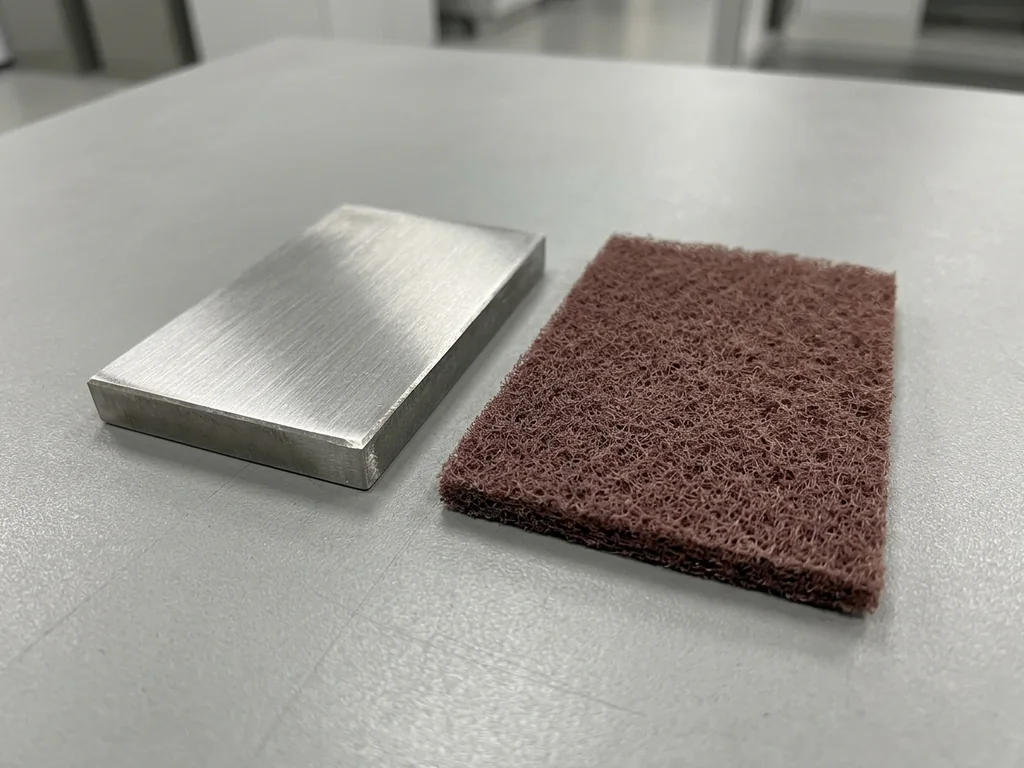
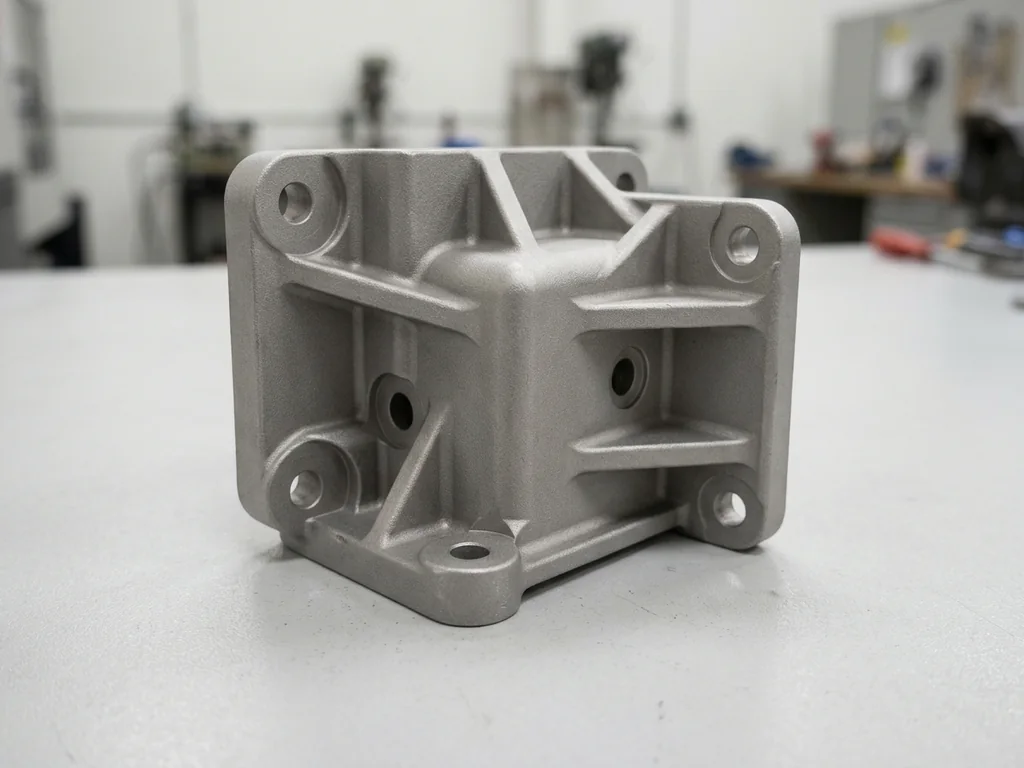
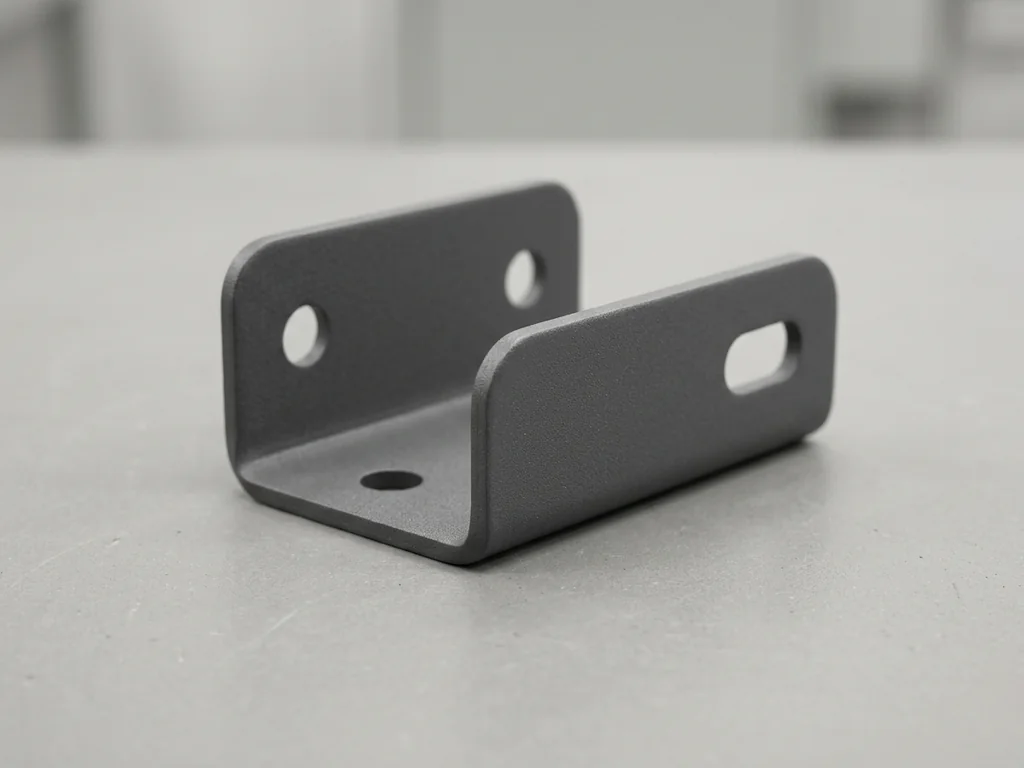
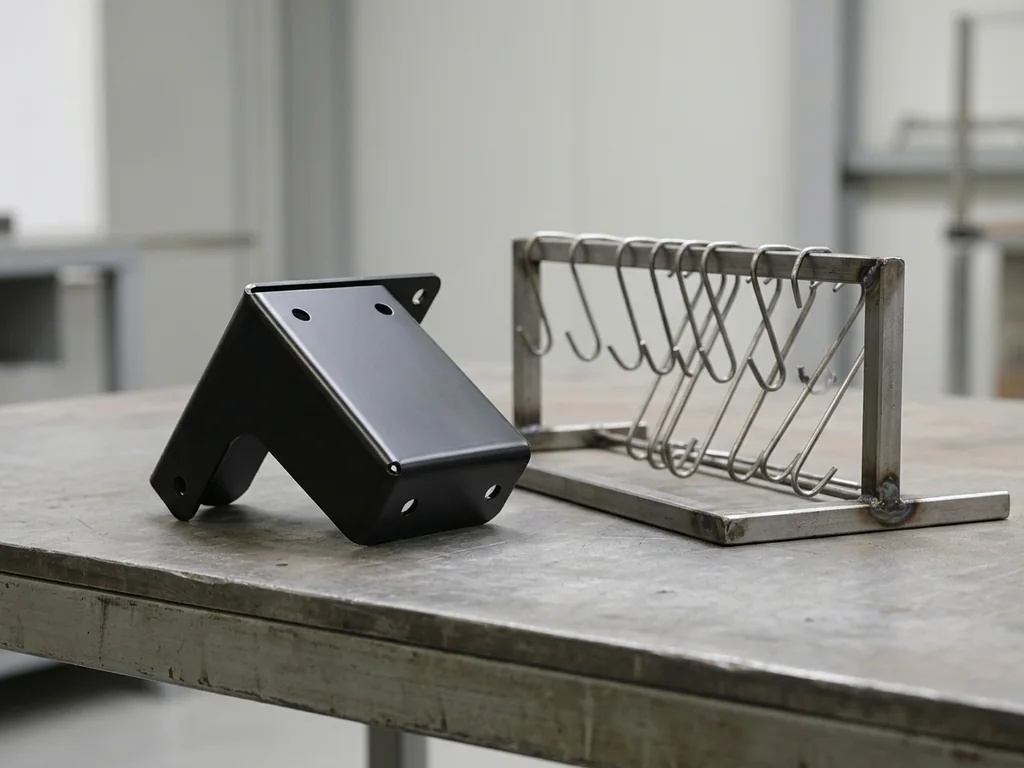
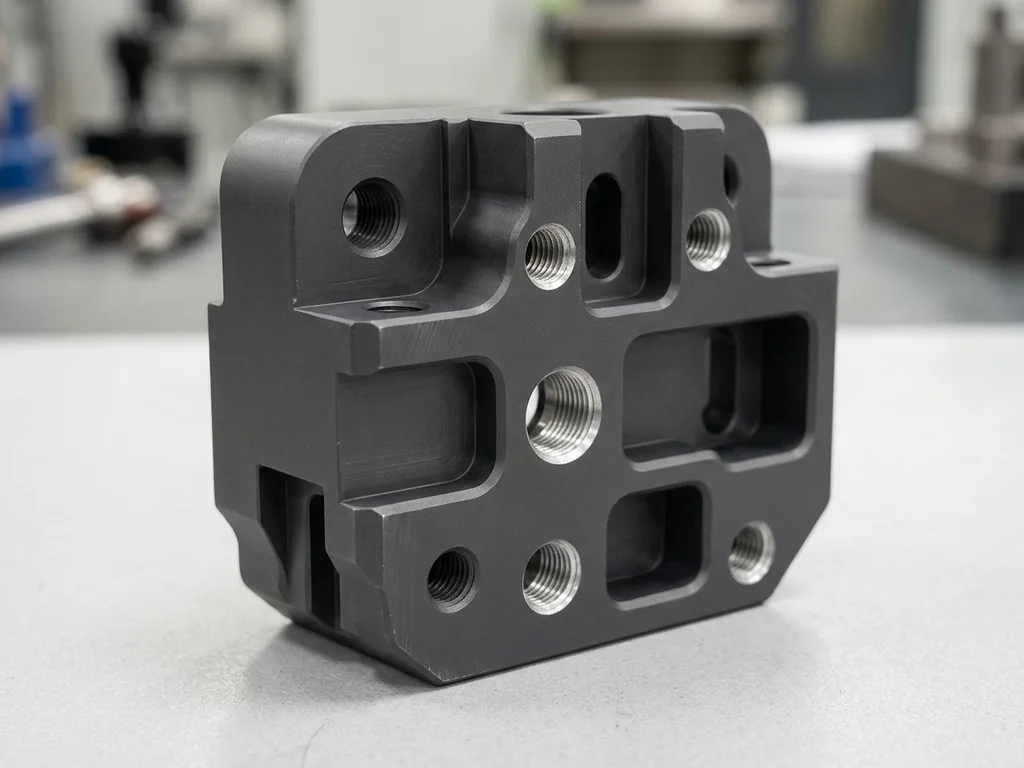
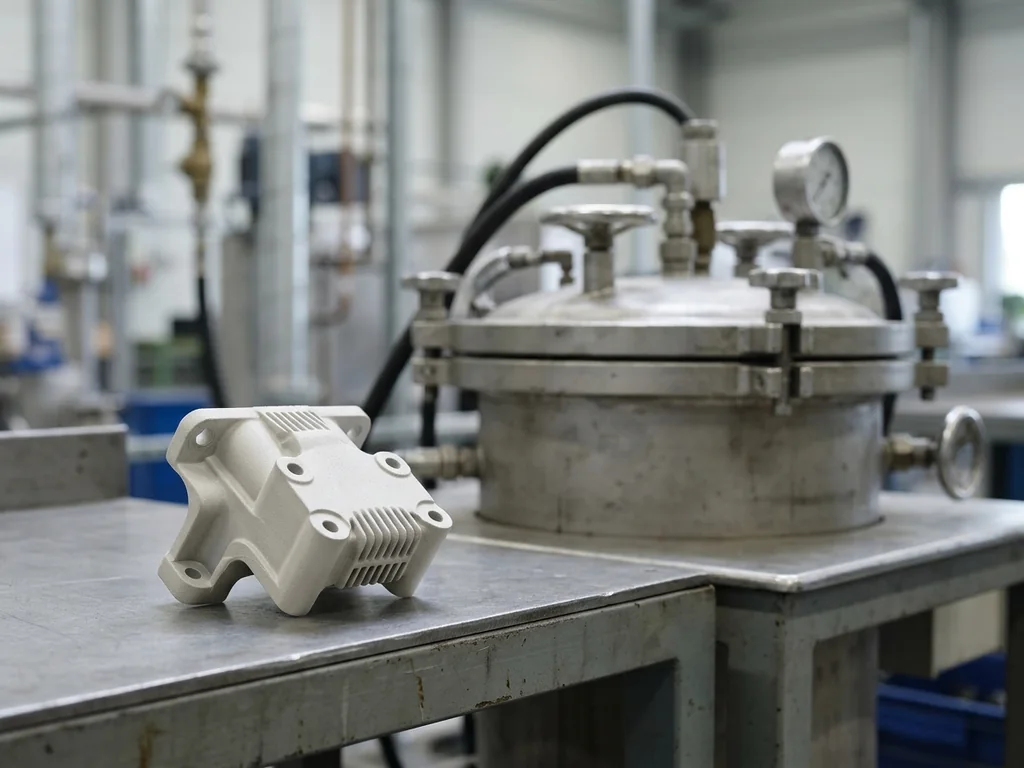
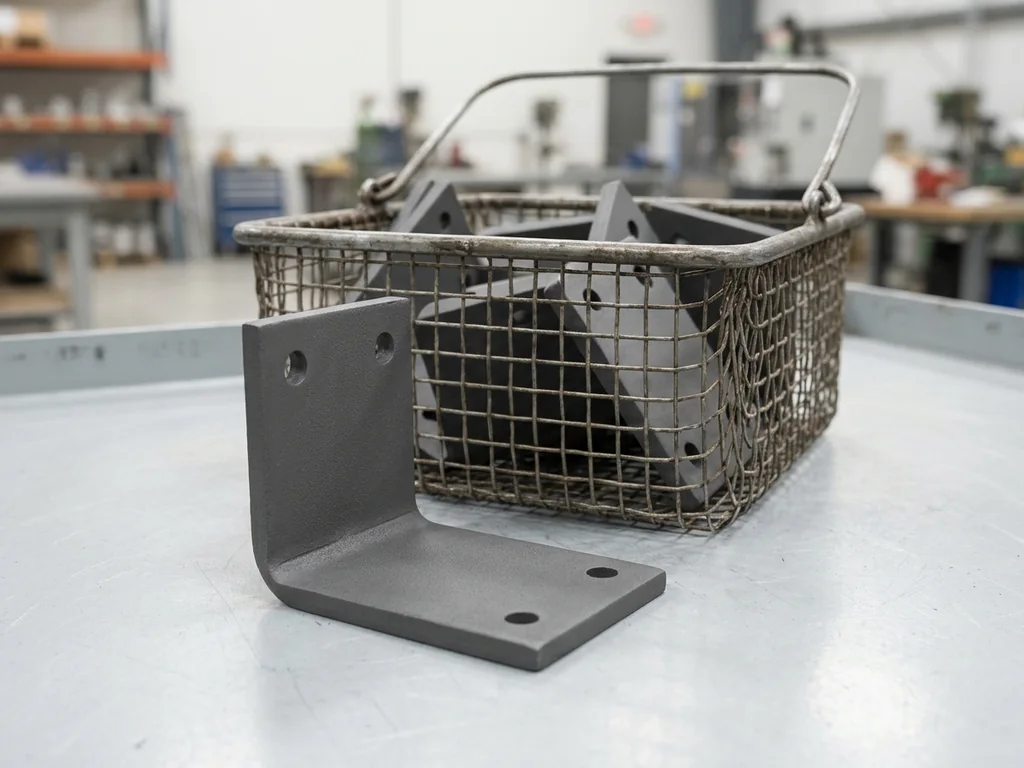
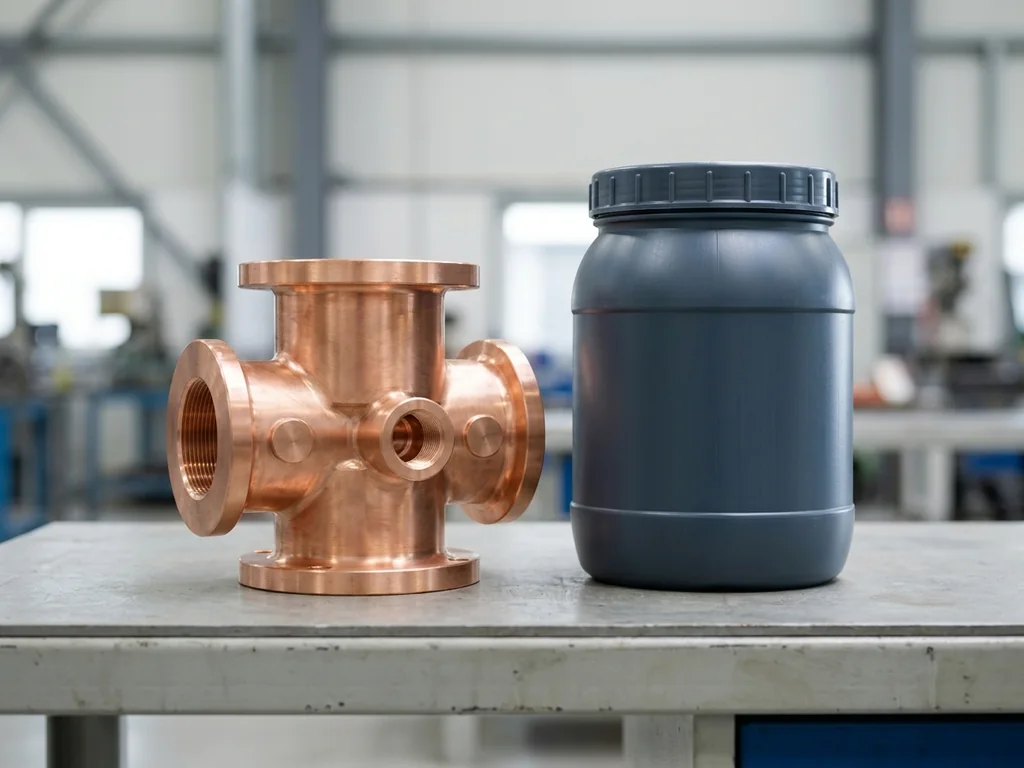
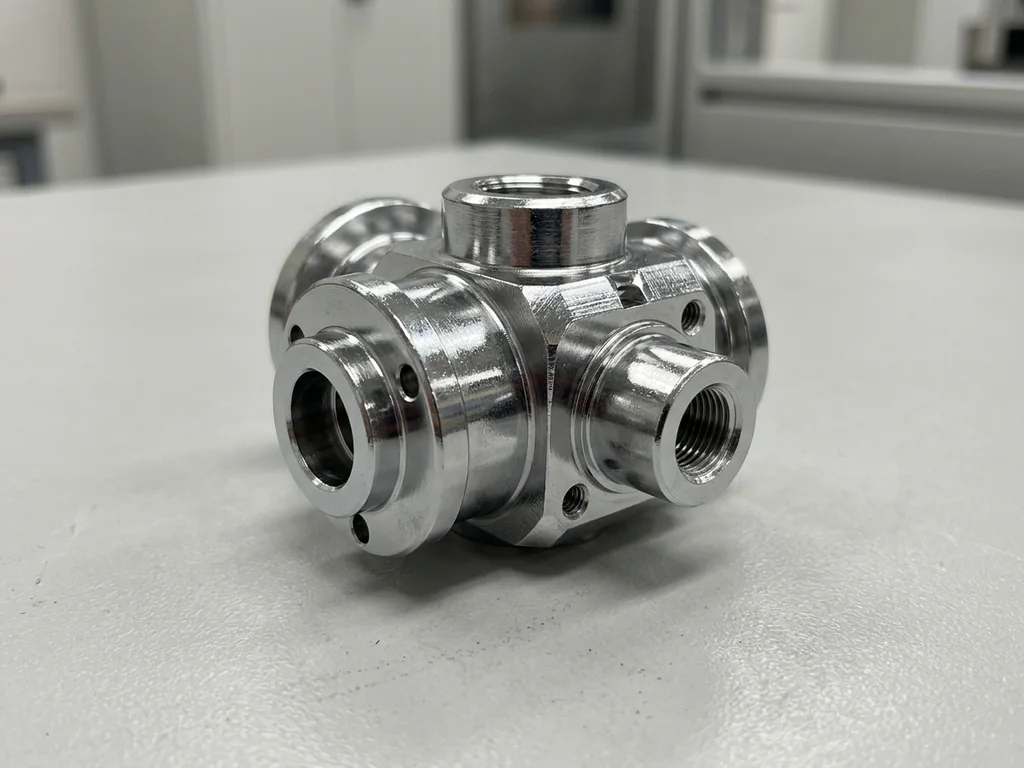
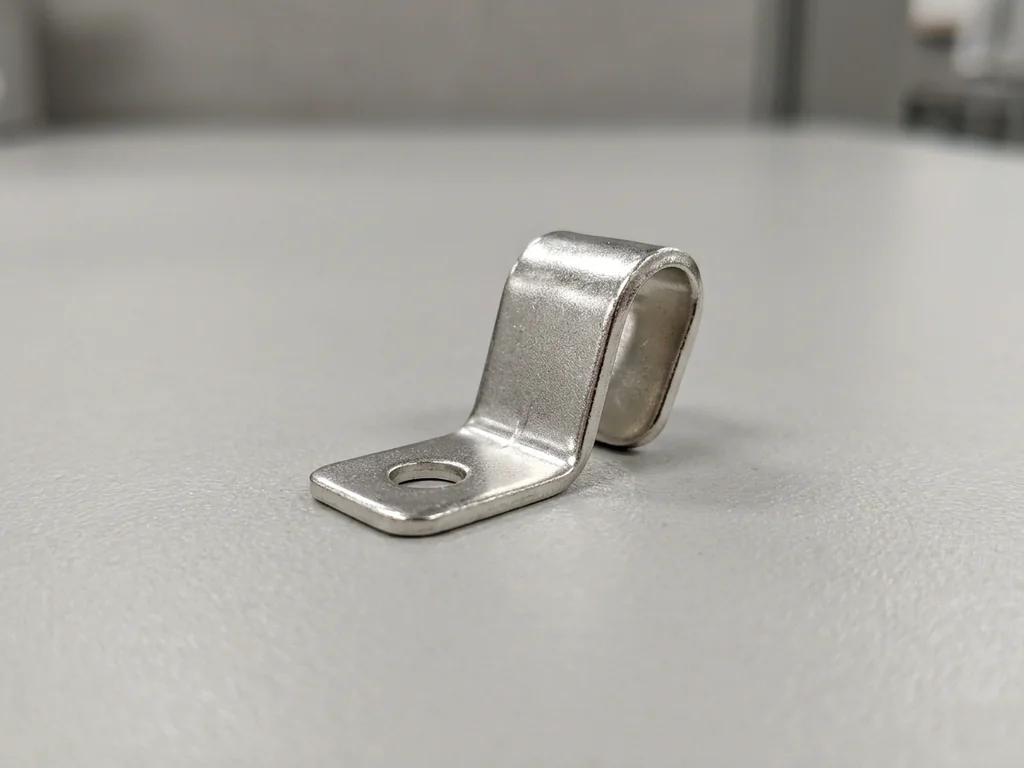
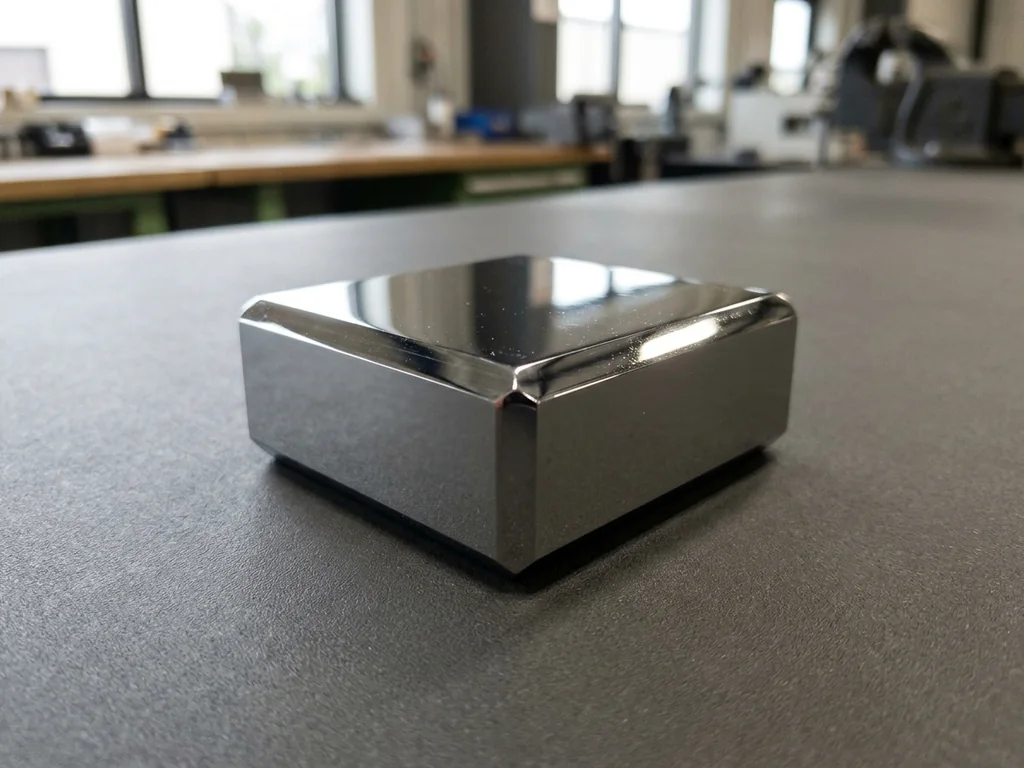
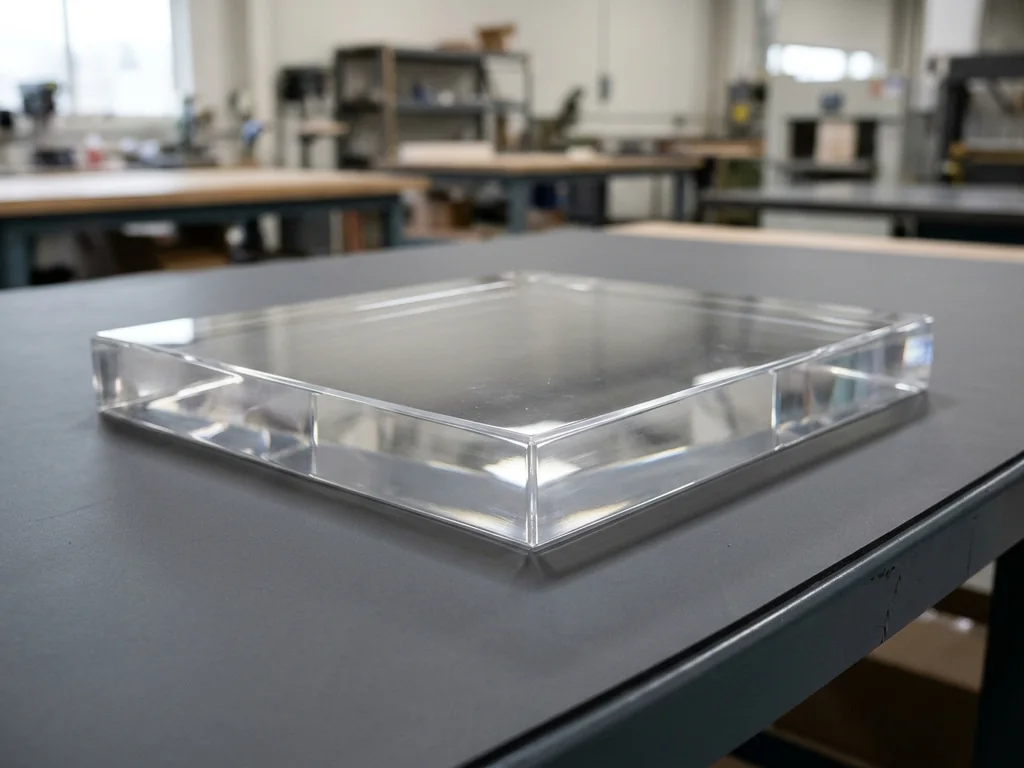
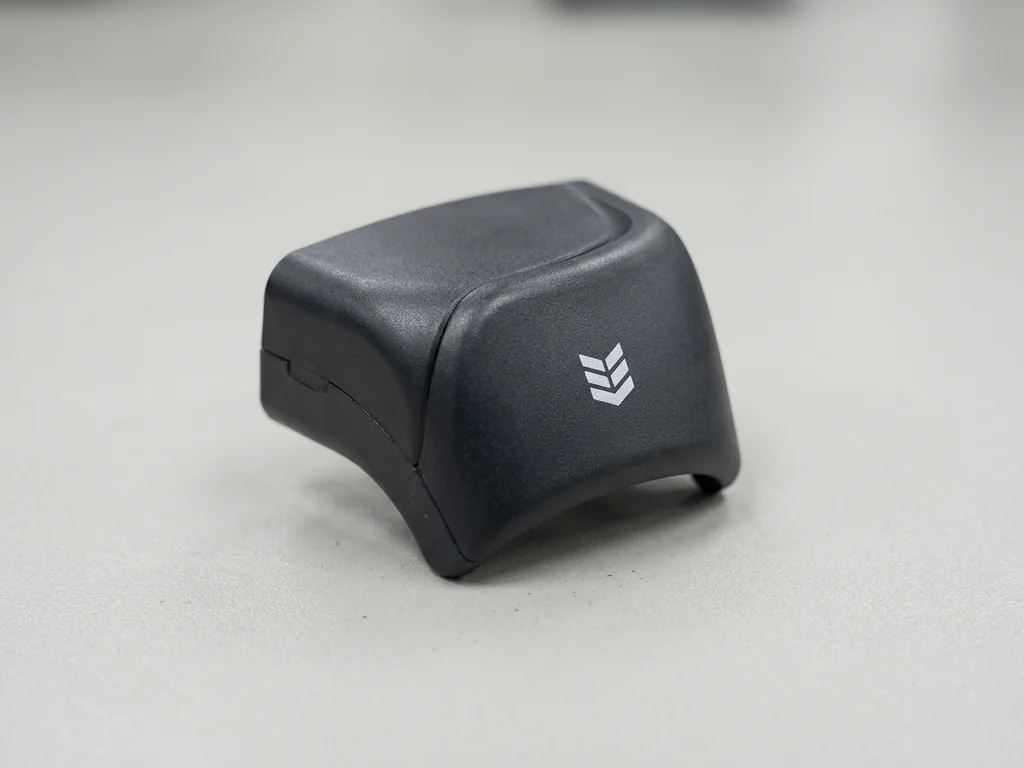
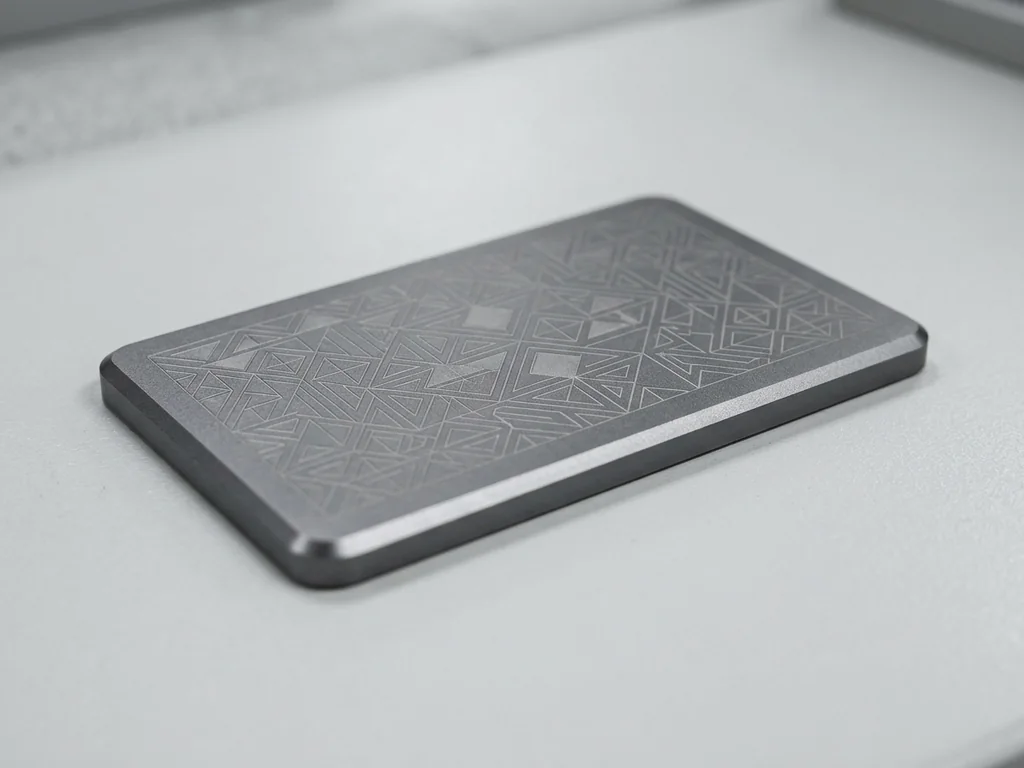
As Machined
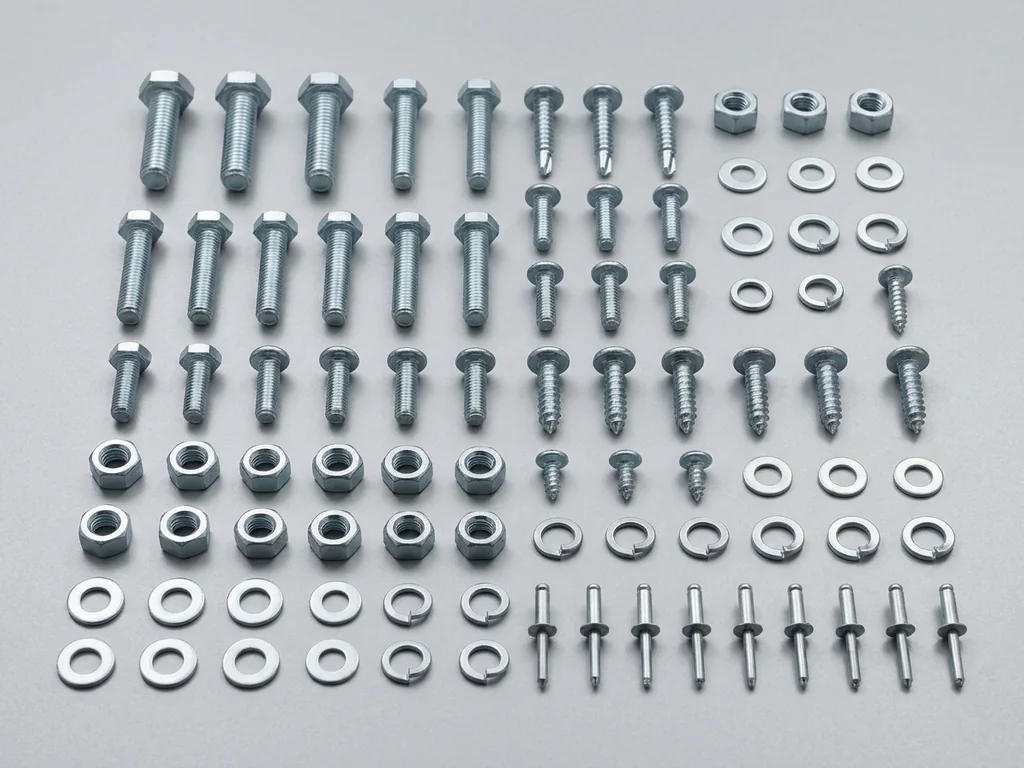
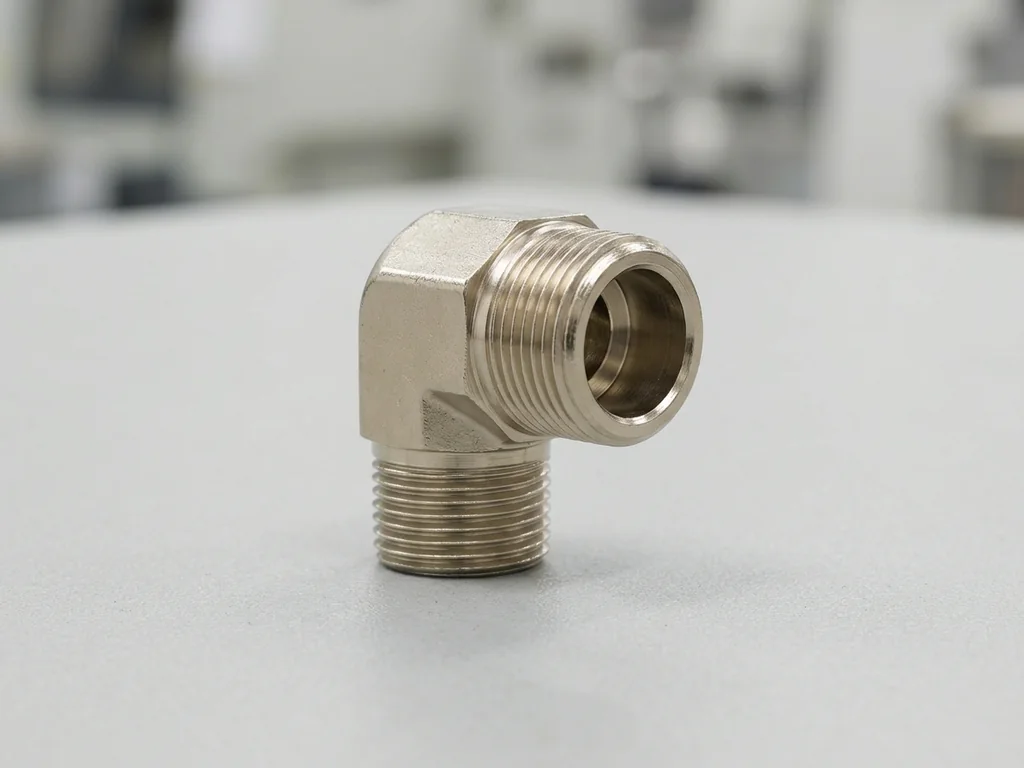
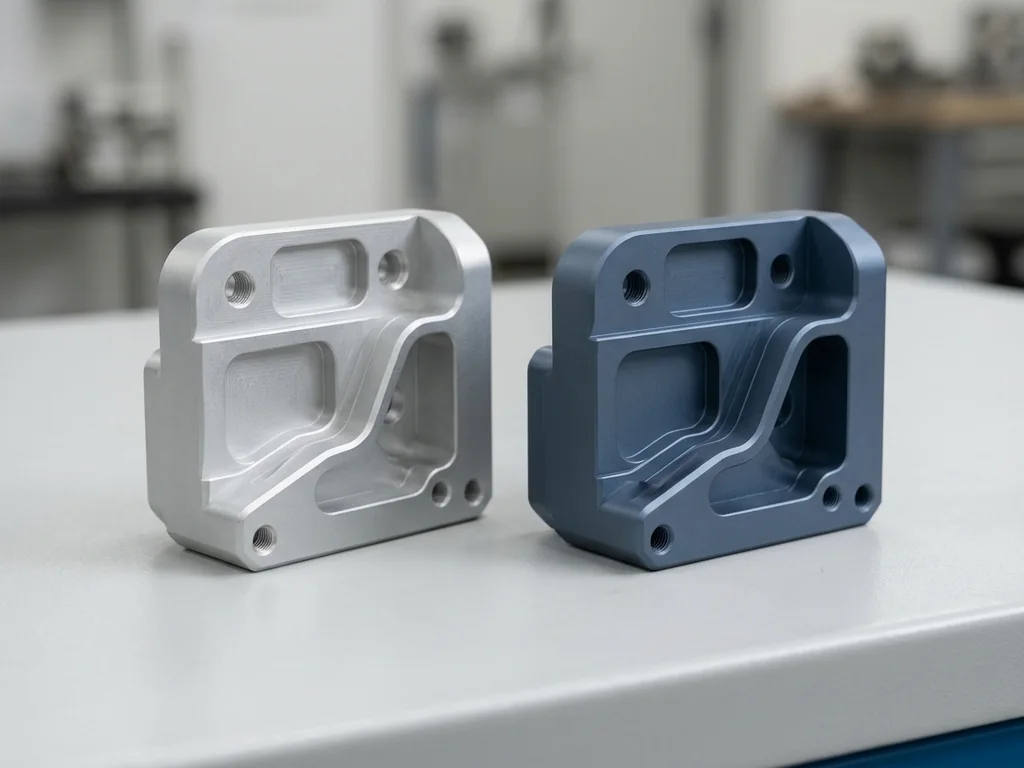
A machined surface retains visible tool marks; edge condition depends on the drawing.
Metals and machinable plastics
Specify finish and edge requirements.
Sanding
Abrasives remove burrs and surface irregularities for a smoother, safer finish.
Metal sheet and machined parts; compatible printed polymers
CNC machining, sheet metal and 3D printing
Confirm abrasive and appearance requirements.
Polishing
Abrasive polishing smooths the surface to improve brightness and appearance.
Aluminum; other substrates by review
CNC machining and 3D printing
In-house mirror polishing is listed for aluminum; other materials require review.
Sand Blasting
Abrasive media prepares and textures a surface by impact.
Aluminum, stainless steel, steel, zinc castings and selected plastics
CNC machining and 3D printing
Select the media, texture and areas to mask.
Bead Blasting
Fine glass beads or ceramic media create a consistent matte texture.
Aluminum, stainless steel, steel, zinc castings and selected plastics
CNC machining and 3D printing
In-house for reviewed materials. Glass bead #120–#320: Ra 0.8–1.6 µm; alumina: Ra 1.6–3.2 µm. Mask threads and mating faces.
Powder Coating
Electrostatically applied powder cures to form a protective, decorative coating.
Pretreated aluminum and cold-rolled steel
CNC machining and sheet metal
Partner-operated. Film reference: 60–100 µm. Specify coating, color, finish and masked areas; allow for fit.
Painting
Liquid coating adds color and a protective or decorative surface.
Steel, aluminum, zinc castings and selected plastics
Sheet metal and 3D printing
Confirm substrate preparation, coating, color and masking.
E-Coating
Electrophoretic coating deposits paint on conductive parts before curing.
Steel, galvanized sheet and aluminum
CNC machining and sheet metal
Confirm availability, pretreatment and coating requirements.
Electroplating
An electrical current deposits a metallic layer onto the part surface.
Steel, copper alloys and zinc castings; other substrates by review
CNC machining and sheet metal
Specify coating, substrate preparation, thickness and masking.
Zinc Plating
A zinc layer helps protect steel by acting as a sacrificial coating.
Carbon and alloy steels; cast iron
CNC machining and sheet metal
Confirm availability, coating specification and post-treatment.
Nickel Plating
An electrolytic nickel layer provides a decorative and protective barrier.
Steel, copper alloys and zinc castings
CNC machining and sheet metal
Confirm substrate preparation, thickness and masking.
Anodizing
Anodizing converts the surface of compatible aluminum into an oxide layer.
Compatible aluminum alloys
CNC machining and sheet metal
Partner-operated. Type II reference: 8–15 µm; Type III: 25–50 µm. Confirm alloy, color, masking and fit.
Passivation
Passivation removes free iron and supports restoration of stainless steel’s protective surface film.
Stainless steels including 303, 304, 316L and 17-4PH
CNC machining and sheet metal
Confirm grade, specification and acceptance requirements.
Chromate Conversion Coating
A chemical conversion film prepares and protects compatible aluminum surfaces.
Compatible aluminum alloys
CNC machining and sheet metal
Confirm coating specification, conductivity and masked areas.
Black Oxide Coating
Controlled oxidation forms a thin dark film on steel surfaces.
Carbon and alloy steels; cast iron
CNC machining and sheet metal
Confirm availability and oil or seal requirements.
Hard Anodizing
Type III anodizing forms a thicker, harder oxide layer on compatible aluminum.
Compatible aluminum alloys
CNC machining and sheet metal
Partner-operated. Type III film reference: 25–50 µm. Confirm alloy, masking and final fit.
Alodine
Alodine is a name associated with aluminum chemical conversion coatings.
Compatible aluminum alloys
CNC machining and sheet metal
Confirm the named coating system and its availability.
Electropolishing
Electrochemical polishing removes surface peaks to improve smoothness.
Reviewed stainless-steel grades
Partner-operated. Removal reference: 5–15 µm; surface reference: Ra 0.1–0.4 µm. Confirm allowances and masking.
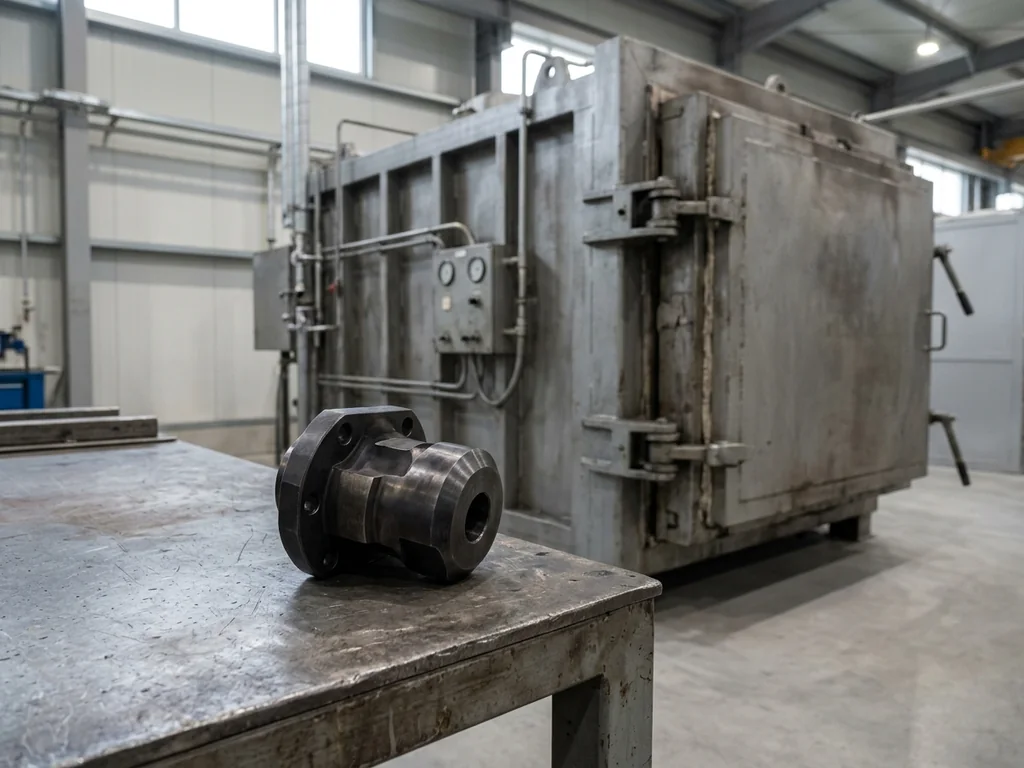
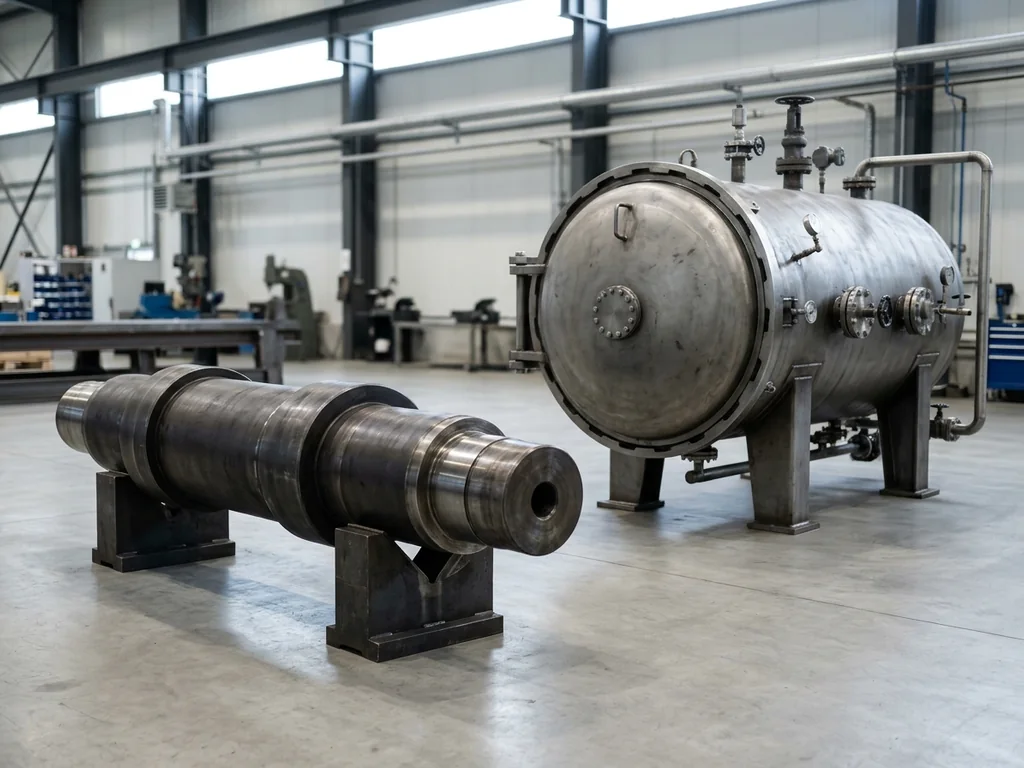
Heat Treatment
Controlled heating and cooling can change a part’s hardness and microstructure.
Suitable carbon and alloy steels; grade depends on treatment
CNC machining and injection mold tooling
Confirm treatment, hardness, distortion allowance and inspection.
Carburising
Carbon diffuses into the surface of low-carbon steel before quenching to create a hardened case.
Applicable materialsLow-carbon and low-alloy steels, including 8620 and 20CrMnTi
Manufacturing processesCNC machining / Injection moulding
Specification / notesGuide reference: treatment temperature 900–950 °C; cycle and results depend on the steel grade and specification. Confirm case depth, heat treatment and distortion allowance for the steel grade.
Carbonitriding
Carbon and nitrogen diffuse into the surface before quenching to create a hardened case.
Applicable materialsLow-carbon and low-alloy steels, including 1018 and 20Cr
Manufacturing processesCNC machining / Injection moulding
Specification / notesGuide reference: treatment temperature 840–880 °C; cycle and results depend on the steel grade and specification. Confirm case depth, steel grade and finishing allowance.
Nitriding (Gas / Plasma)
Nitrogen diffuses into suitable steel to form a hardened surface layer.
Applicable materialsSuitable alloy steels, including 38CrMoAl, 42CrMo and H13
Manufacturing processesCNC machining / Injection moulding
Specification / notesGuide reference: treatment temperature 500–580 °C; case properties depend on the steel grade and cycle. Confirm the steel grade, case depth and compound-layer requirements.
Nitrocarburising (Soft Nitriding)
Nitrogen and carbon diffuse into a surface to improve wear resistance.
Applicable materialsCarbon and alloy steels, cast iron and suitable stainless steels
Manufacturing processesCNC machining / Injection moulding
Specification / notesGuide reference: treatment temperature 520–580 °C; case properties depend on the substrate and cycle. Confirm substrate, case depth and any subsequent sealing.
Oxynitriding
Nitriding followed by oxidation produces a hardened case and oxide layer.
Applicable materialsSuitable carbon steels, alloy tool steels and cast iron
Manufacturing processesCNC machining / Injection moulding
Specification / notesGuide reference: treatment temperature 540–580 °C; case properties depend on the substrate and cycle. Confirm substrate, case depth and required corrosion performance.
QPQ Salt-Bath Treatment
Salt-bath nitrocarburizing, polishing and oxidation are combined in a multi-step surface treatment.
Applicable materialsSuitable carbon and alloy steels, stainless steels and cast iron
Manufacturing processesCNC machining / Injection moulding
Specification / notesGuide reference: nitrocarburizing at 520–580 °C; the complete cycle depends on the specification. Confirm substrate, case depth, finishing and applicable environmental controls.
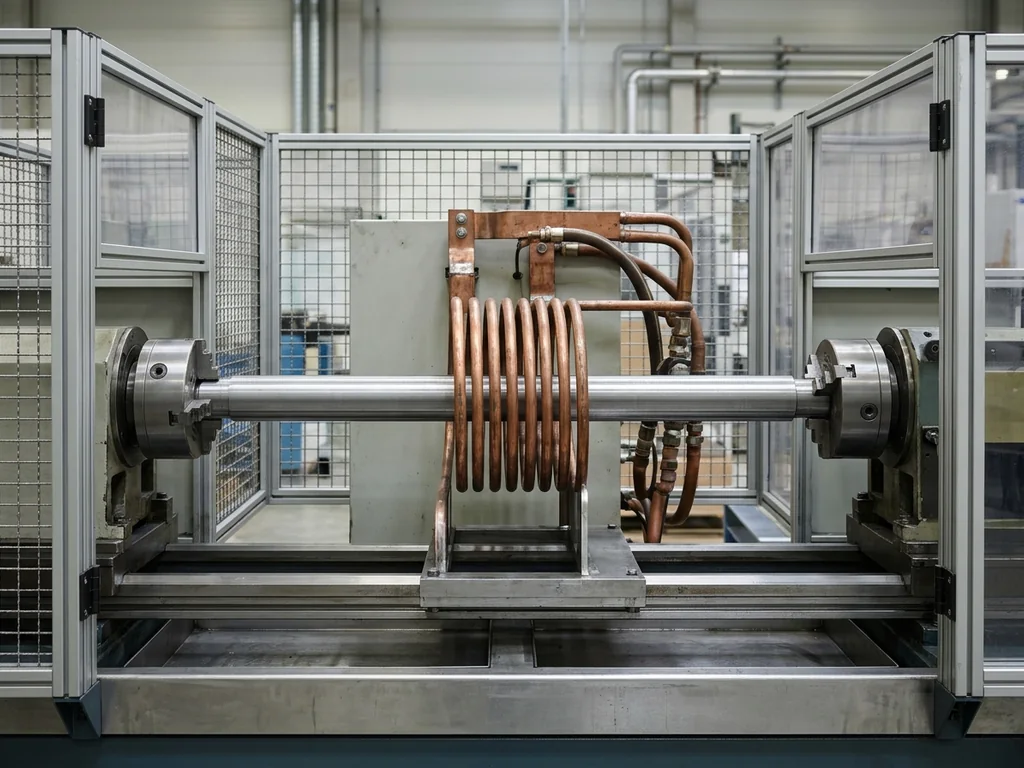
Induction Hardening
Induction heating followed by quenching hardens selected areas of a suitable steel part.
Applicable materialsMedium-carbon steels, suitable alloy steels and ductile iron
Manufacturing processesCNC machining / Injection moulding
Specification / notesGuide reference: surface heating at 800–950 °C, followed by quenching; confirm the steel grade and treatment pattern. Confirm hardening pattern, case depth and distortion allowance.
Flame Hardening
A flame heats selected steel surfaces before quenching to create a hardened case.
Applicable materialsMedium-carbon steels, suitable alloy steels and cast iron
Manufacturing processesCNC machining / Injection moulding
Specification / notesGuide reference: surface heating at 800–900 °C, followed by quenching; confirm the steel grade and treatment pattern. Confirm hardening area, depth and distortion allowance.
Annealing of plastics
Controlled heating of plastic parts can reduce residual stresses from molding or machining.
Applicable materialsSuitable PC, PMMA, ABS, POM, PA and reinforced thermoplastics
Manufacturing processesInjection moulding / 3D printing
Specification / notesConfirm the resin grade, temperature and cooling cycle to limit distortion.
Post-cure
Additional curing completes or advances polymer cross-linking after initial processing.
Applicable materialsCompatible thermosets and photopolymers
Manufacturing processesInjection moulding / 3D printing
Specification / notesConfirm the resin-specific time, temperature and dimensional requirements.
Heat setting
Controlled heating and fixturing help stabilize the shape of a polymer part.
Applicable materialsCompatible PET and PA fibers, films and extruded polymer profiles
Manufacturing processesInjection moulding / 3D printing
Specification / notesConfirm polymer grade, fixturing, temperature and cooling conditions.
Conditioning
Controlled moisture conditioning can bring nylon parts closer to their service condition.
Applicable materialsPA6, PA66 and compatible hygroscopic nylons
Manufacturing processesInjection moulding / 3D printing
Specification / notesConfirm moisture targets and dimensional requirements for the nylon grade.
Micro-Arc Oxidation (MAO / PEO)
Plasma discharges form a ceramic-like oxide coating on suitable light-metal alloys.
Applicable materialsSuitable aluminum, magnesium and titanium alloys
Manufacturing processesCNC machining
Specification / notesGuide reference: coating thickness 10–100 µm; thickness depends on the alloy and specification. Confirm alloy, coating thickness and surface roughness requirements.
Phosphating
A phosphate conversion layer prepares steel surfaces for paint, oil or other protective treatments.
Applicable materialsCarbon and alloy steels, cast iron and suitable galvanized sheet
Manufacturing processesCNC machining / Sheet metal
Specification / notesGuide reference: film thickness 1–10 µm; the selected phosphate system and sealing affect the result. Confirm phosphate system and any paint or oil sealing requirements.
Pickling (Post-Weld)
Post-weld pickling removes heat tint and surface contamination from suitable stainless steel.
Applicable materialsWelded stainless steels and suitable nickel alloys
Manufacturing processesCNC machining / Sheet metal
Specification / notesConfirm alloy and surface finish; chemical handling and waste controls apply.
Anti-Tarnish Treatment (BTA)
An inhibitor treatment helps reduce tarnishing of copper and its alloys.
Applicable materialsCopper, brass, bronze and compatible copper alloys
Manufacturing processesCNC machining
Specification / notesConfirm the inhibitor system and expected storage or service conditions.
Steam Treatment
Steam treatment forms an oxide layer on suitable iron-based sintered parts.
Applicable materialsIron-based powder-metallurgy and sintered-steel parts
Manufacturing processesCNC machining
Specification / notesConfirm the iron-based substrate, porosity and specified oxide condition.
Hot-Dip Galvanising
Steel is immersed in molten zinc to form a protective zinc and zinc-iron coating.
Applicable materialsSuitable carbon steels and cast iron
Manufacturing processesSheet metal / CNC machining
Specification / notesGuide reference: coating thickness 45–85 µm; actual thickness depends on the steel and galvanizing specification. Allow for coating thickness and evaluate threads, fit and distortion.
Electroless Nickel Plating (Ni-P)
An autocatalytic chemical bath deposits nickel-phosphorus without external electric current.
Applicable materialsSuitable steel, stainless steel, aluminum and copper alloys
Manufacturing processesCNC machining / Sheet metal / 3D printing
Specification / notesGuide reference: coating thickness 5–50 µm; confirm bath system, substrate and final specification. Confirm alloy pretreatment, phosphorus content and coating thickness.
Chrome Plating (Decorative / Hard)
A chromium layer is deposited for decorative or functional surface requirements.
Applicable materialsSuitable steels, copper alloys and zinc die castings
Manufacturing processesCNC machining / Sheet metal
Specification / notesConfirm decorative or hard-chrome specification and environmental requirements.
Tin Plating
A tin layer is electrodeposited for suitable electrical or corrosion-protection applications.
Applicable materialsSuitable low-carbon steel, copper and copper alloys
Manufacturing processesSheet metal / CNC machining
Specification / notesConsider tin whisker risk, underlayer and service conditions for electrical parts.
Silver Plating
Silver is electrodeposited to provide a conductive or decorative surface.
Applicable materialsSuitable copper alloys, stainless steel, Kovar and steel
Manufacturing processesCNC machining / Sheet metal
Specification / notesConfirm underlayer, tarnish protection and contact-wear requirements.
Zinc-Aluminum Flake Coating
A cured zinc-aluminum flake coating provides a protective barrier on suitable steel parts; formulation varies by coating system.
Applicable materialsSuitable steel fasteners, springs, cast iron and stampings
Manufacturing processesSheet metal / CNC machining
Specification / notesConfirm coating system, corrosion requirement and compatibility with threads.
PTFE (Teflon) coating
A fluoropolymer coating can provide a low-friction, non-stick surface.
Applicable materialsSteel, stainless steel and aluminum compatible with the curing process
Manufacturing processesCNC machining / Sheet metal
Specification / notesConfirm curing temperature, coating system and substrate temperature limits.
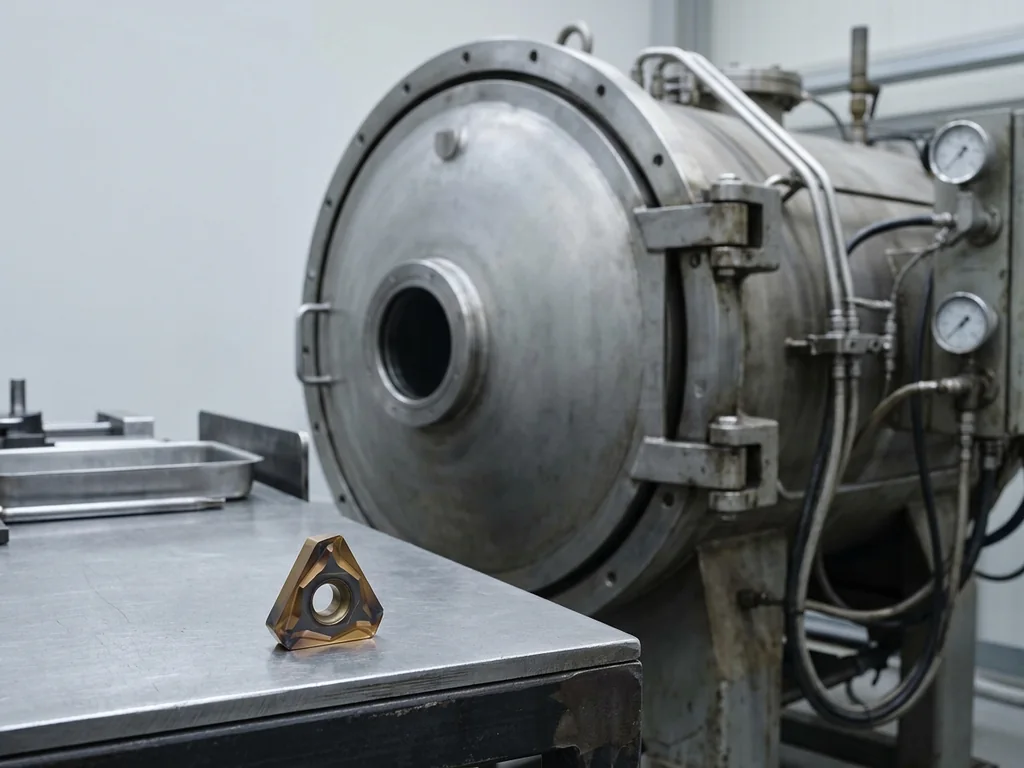
PVD coating (TiN / TiAlN / CrN)
Physical vapor deposition forms a thin coating in a vacuum for wear or functional applications.
Applicable materialsSuitable tool steels, high-speed steels, carbides and stainless steels
Manufacturing processesCNC machining / Sheet metal
Specification / notesGuide reference: coating thickness 1–5 µm; confirm the coating type and substrate. Confirm coating material, substrate hardness and coverage of holes or cavities.
CVD coating
Chemical vapor deposition uses reactive gases to form a coating on a heated substrate.
Applicable materialsSuitable carbide, tool steel and ceramic substrates
Manufacturing processesCNC machining / Sheet metal
Specification / notesGuide reference: deposition temperature 800–1100 °C; check the substrate and heat-treatment requirements. Check substrate temperature limits and dimensional allowance.
TD coating
Thermoreactive diffusion forms a carbide-rich layer on suitable tool steels.
Applicable materialsHigh-carbon and alloy tool steels
Manufacturing processesCNC machining / Sheet metal
Specification / notesGuide reference: treatment temperature 850–1050 °C; the steel and treatment cycle determine the result. Confirm steel carbon content and allowance for distortion and finishing.
Impregnation
A sealant penetrates connected pores in suitable cast or sintered parts to improve leak tightness.
Applicable materialsSuitable aluminum, zinc, magnesium, bronze and sintered parts with connected porosity
Manufacturing processesCNC machining
Specification / notesConfirm the porosity type, sealing method and service temperature.
Clear coat
A transparent topcoat protects or adjusts the appearance of a prepared part surface.
Applicable materialsCompatible clear and translucent plastic parts
Manufacturing processes3D printing
Specification / notesConfirm coating compatibility, gloss and substrate preparation.
Soft-touch coating
A soft-touch topcoat gives a prepared part a tactile matte finish.
Applicable materialsCompatible plastic and photopolymer parts
Manufacturing processes3D printing
Specification / notesConfirm coating system, adhesion and wear expectations.
Primer
Primer prepares a surface for improved adhesion of a subsequent coating.
Applicable materialsPrepared sheet metal and compatible printed plastic or metal parts
Manufacturing processes3D printing / Sheet metal
Specification / notesConfirm pretreatment, primer compatibility and thickness allowance.
Ceramic coating (Cerakote-type)
A ceramic-containing coating provides a protective or decorative surface on compatible substrates.
Applicable materialsCompatible metal and polymer substrates; coating system depends on heat sensitivity
Manufacturing processes3D printing / CNC machining / Sheet metal
Specification / notesConfirm coating series, curing temperature and substrate compatibility.
Shot blasting
Abrasive shot or grit is propelled at a part to remove scale or prepare its surface.
Applicable materialsSteel structures, cast iron, forgings and selected aluminum parts
Manufacturing processesCNC machining
Specification / notesConfirm media and intensity; protect thin walls and critical dimensions.
Shot peening
Controlled shot impacts create compressive residual stress at the surface of suitable metal parts.
Applicable materialsSuitable steel, aluminum and titanium parts
Manufacturing processesCNC machining
Specification / notesSpecify intensity, coverage and areas requiring protection.
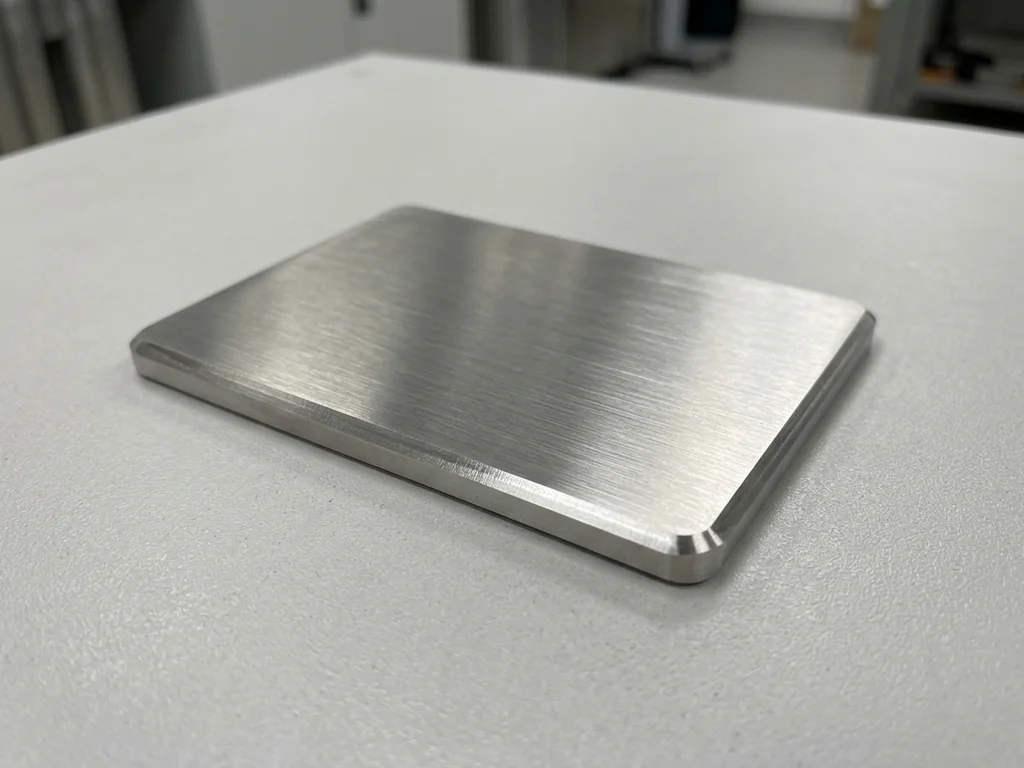
Brushed finish (#4 / HL)
Abrasive brushing creates a directional satin texture.
Applicable materialsSuitable stainless steel, aluminum, brass and titanium
Manufacturing processesCNC machining / Sheet metal / 3D printing
Specification / notesSpecify grain direction, surface sample and acceptance criteria.
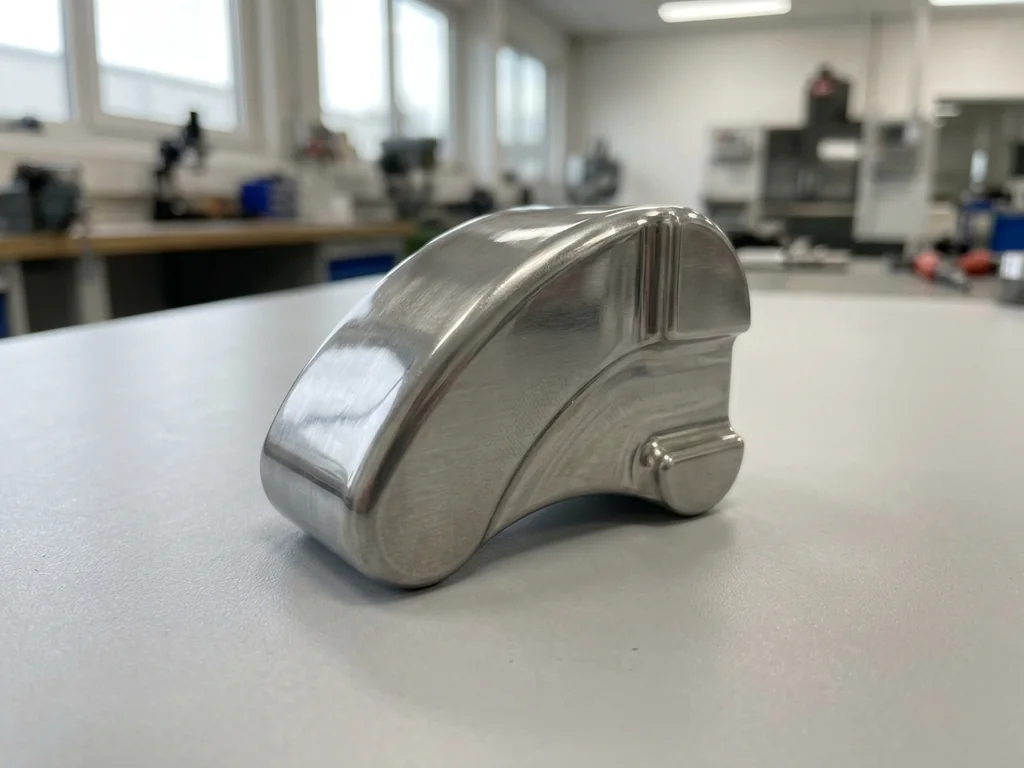
Mirror polishing (8K, #8000+)
Progressively finer polishing produces a reflective, mirror-like surface.
Applicable materialsSuitable stainless steel, aluminum, copper, titanium and acrylic
Manufacturing processesCNC machining / 3D printing
Specification / notesConfirm achievable finish, flatness and cosmetic acceptance criteria.
Precision lapping and superfinishing
Lapping and superfinishing remove a thin layer to refine surface and form.
Applicable materialsSuitable hardened steel, carbide, ceramics, sapphire and optical glass
Manufacturing processesCNC machining
Specification / notesSpecify surface roughness, flatness and dimensional requirements.
Vibratory finishing (tumbling)
Abrasive media in a vibrating bowl or rotating drum refine parts in batches.
Applicable materialsSmall and medium metal parts and selected hard plastics
Manufacturing processesCNC machining
Specification / notesConfirm edge, surface and dimensional tolerances for the selected media.
Deburring
Deburring removes unwanted sharp edges or burrs left by manufacturing operations.
Applicable materialsMost metals and suitable hard plastics or ceramics
Manufacturing processesCNC machining
Specification / notesSpecify permitted edge break and protect critical features.
Flame and diamond polishing
Flame or diamond polishing can refine compatible transparent plastic surfaces.
Applicable materialsCompatible transparent plastics and selected optical materials
Manufacturing processesCNC machining / Injection moulding
Specification / notesConfirm material, geometry and cosmetic acceptance requirements.
Brushed + Electropolished
Directional brushing followed by electropolishing produces a satin surface with improved smoothness.
Applicable materialsCompatible stainless steels and other electropolishable metals
Manufacturing processesSheet metal / CNC machining
Specification / notesSpecify grain direction and the applicable electropolishing requirements.
Laser Marking
A focused laser marks a surface for identification or decoration.
Applicable materialsSuitable metals and plastics; laser type depends on substrate
Manufacturing processesCNC machining / Injection moulding / Sheet metal / 3D printing
Specification / notesConfirm material, mark location, legibility and surface acceptance.
Laser Engraving
A laser removes material locally to create a recessed mark.
Applicable materialsSuitable metals and selected acrylic or other nonmetallic materials
Manufacturing processesCNC machining / Injection moulding / Sheet metal / 3D printing
Specification / notesConfirm marking depth, location and treatment of affected surfaces.
Screen Printing
Ink is transferred through a patterned screen onto a part surface and then cured.
Applicable materialsCompatible plastics, metals, glass and ceramics
Manufacturing processesCNC machining / Sheet metal
Specification / notesConfirm ink, substrate preparation, artwork and color requirements.
UV Printing
UV-curable ink is digitally deposited and cured to create a surface graphic.
Applicable materialsCompatible plastics, metals, glass and painted surfaces
Manufacturing processesInjection moulding
Specification / notesConfirm ink adhesion, substrate preparation and wear requirements.
Hot Stamping
Heat and pressure transfer a decorative foil from its carrier to a compatible surface.
Applicable materialsCompatible molded plastics
Manufacturing processesInjection moulding
Specification / notesConfirm foil, substrate, die geometry and heat sensitivity.
Texturing
A controlled texture is formed on a part or molding surface for appearance or function.
Applicable materialsSuitable molded plastics and metal surfaces
Manufacturing processesInjection moulding / 3D printing
Specification / notesSpecify texture reference, location and applicable mold draft.
Flame and Plasma Pre-treatment
Flame or plasma treatment prepares compatible surfaces for improved coating or adhesive bonding.
Applicable materialsSuitable plastics, including selected polyolefins
Manufacturing processesCNC machining / Injection moulding / 3D printing
Specification / notesConfirm treatment method and coating or adhesive requirements for the substrate.
Pad Printing
A flexible pad transfers ink from a patterned plate onto a part surface.
Applicable materialsABS, PC and ABS/PC; other substrates require compatibility review
Manufacturing processesInjection moulding / CNC machining
Specification / notesConfirm substrate compatibility, artwork, ink and durability requirements.
Laser Etching
Laser etching creates a shallow visible surface mark.
Applicable materialsAnodized aluminum, plated steel and suitable other metals
Manufacturing processesSheet metal / CNC machining
Specification / notesConfirm mark location, contrast and surface compatibility.
Stencil Part Marking
A stencil guides applied paint or ink to create a part-identification mark.
Applicable materialsSuitable metals and plastics with paint-compatible surfaces
Manufacturing processesSheet metal / CNC machining
Specification / notesConfirm marking location, paint compatibility and durability requirements.
Vapour smoothing
Controlled chemical vapor smooths compatible printed polymer surfaces.
Applicable materialsCompatible printed PA and TPU materials
Manufacturing processes3D printing
Specification / notesConfirm material compatibility, dimensional allowance and surface acceptance.
Support removal and sanding
Supports and remaining marks are removed from printed parts by suitable post-processing methods.
Applicable materialsSuitable resin, nylon and TPU printed parts
Manufacturing processes3D printing
Specification / notesConfirm support-removal areas and cosmetic requirements.
Dyeing
A dye colors compatible printed or molded polymer parts.
Applicable materialsCompatible light-colored nylon and other dyeable plastics
Manufacturing processes3D printing / Injection moulding
Specification / notesConfirm material, base color and color or durability requirements.
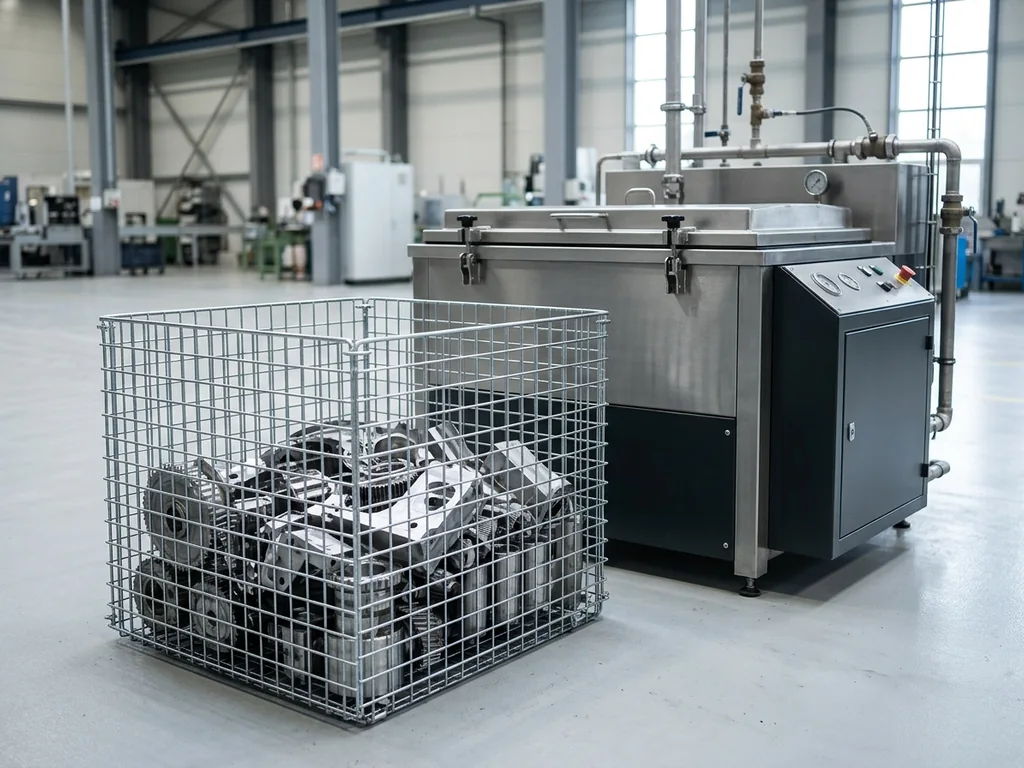
Part Cleaning
Cleaning removes contaminants to prepare a part for its next process or intended handling.
Applicable materialsSuitable metal and plastic parts
Manufacturing processesInjection moulding / CNC machining
Specification / notesSpecify cleanliness, residue and packaging requirements.
Masking
Masking protects selected surfaces from coating or other treatments.
Applicable materialsSuitable metal and plastic parts
Manufacturing processesSheet metal / CNC machining
Specification / notesIdentify protected surfaces, threads and fit-critical features on the drawing.